
The 9th Circuit Got Dragged in on a Sunday to Quarantine 20,000 Ballots. Even Trump's Own Appointee Asked "How?"
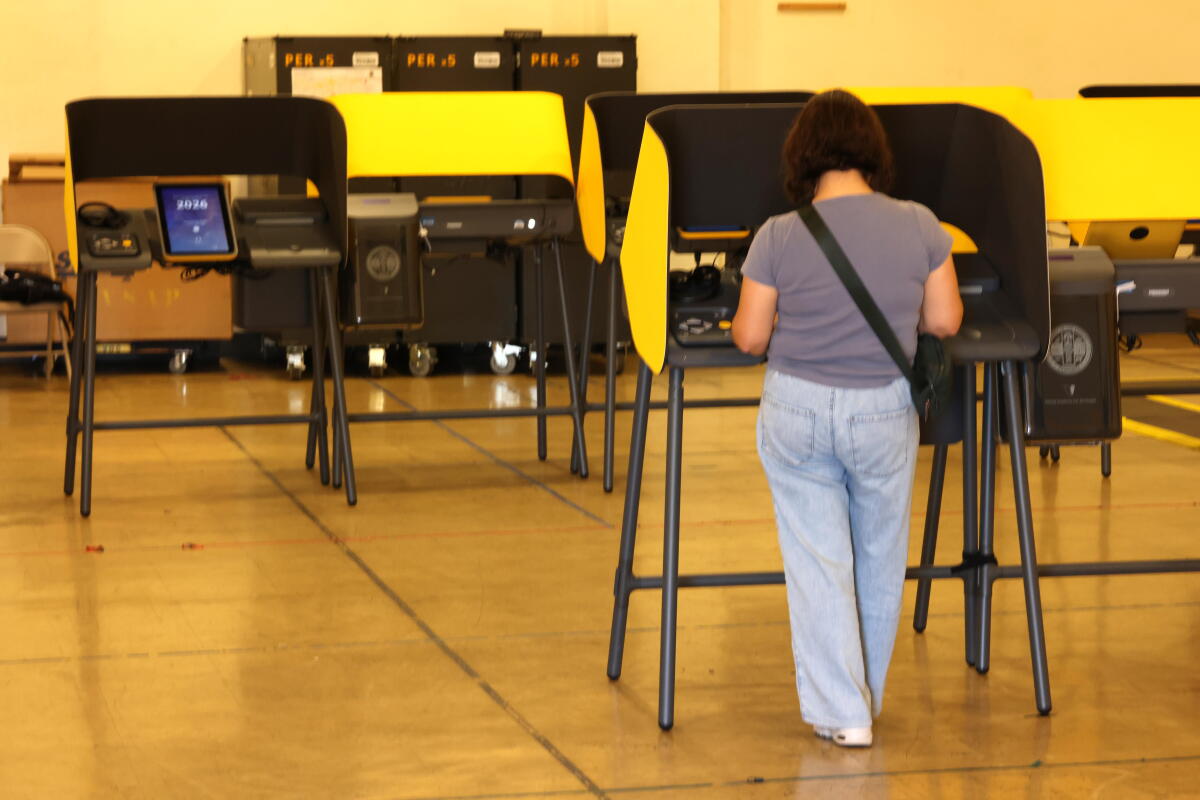
Photo: Genaro Molina / Los Angeles Times
By Dakota Jones
Desk: Political & Government, Campaigns & Elections, Courts & Litigation
On Sunday, October 25, the Ninth Circuit Court of Appeals held a rare remote hearing on the Justice Department’s emergency effort to make California set aside ballots from about 20,000 voters it flagged as “likely noncitizens.”
The appellate panel did not order those ballots quarantined. It issued no ruling at all. But the questions from the bench made clear that the DOJ’s request faces two immediate obstacles: whether the appeals court can intervene before the lower court rules, and whether federal officials have shown enough to justify setting aside ballots under California’s election rules.
The hearing lasted about an hour, with 30 minutes per side. The panel heard from DOJ attorney Matthew Donnelly and California attorney Sam Siegel. Even one of President Trump’s own appointees, Judge Mark Bennett, kept returning to a basic question: How does this request fit with the law?
What you’ll learn: What happened Sunday, and what did not
The DOJ asked the Ninth Circuit for emergency relief in its fight with California, Secretary of State Shirley Weber and Los Angeles County Registrar Dean Logan. Its requested intervention would force state officials to set aside ballots linked to the flagged voters while their citizenship was checked.
That’s the request. It is not an order.
A lower-court judge had declined to rule immediately on the DOJ’s temporary restraining order request. The department appealed before that court issued an order. On Sunday, the three-judge panel heard arguments but left the request undecided. A decision is expected soon, and a hearing in the trial court is set for Tuesday.
The stakes are time-sensitive. Election Day is November 3. The DOJ’s demand would affect ballots in California, where millions of people have already voted.
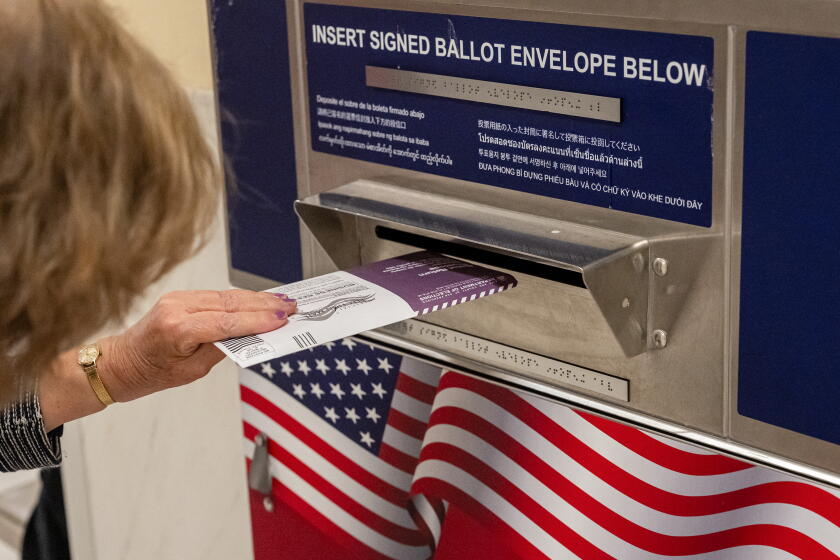
Photo: David Paul Morris / Bloomberg via Getty Images, via the Los Angeles Times
First question: Does the appeals court have jurisdiction?
Bennett, a Trump appointee, questioned whether the Ninth Circuit had authority to take up the emergency request before the district court had ruled.
“I don’t see how we have jurisdiction,” he told Donnelly.
That is not a technical footnote. Jurisdiction means a court has the legal authority to hear and decide a matter. If the appellate court lacks it at this stage, the DOJ’s arguments about the ballots may not get a decision from this panel at all.
The DOJ’s appeal followed the lower court’s decision not to rule immediately on its request for a temporary restraining order. Bennett pressed on why the appeals court should step in when the trial court had not yet made findings or issued an order.
The state’s argument was straightforward: there was nothing for the appeals court to review yet. That question now sits beside the underlying dispute, and the panel must decide whether it can reach the merits before it weighs what the DOJ wants done.
Second question: Can the federal government override California’s election rules this way?
Bennett also challenged the DOJ’s request under the Elections Clause, which gives states a role in setting the manner of conducting elections, subject to Congress’s authority.
“It seems to me that you want us to issue an injunction that is entirely inconsistent with the law the California legislature has adopted pursuant to the Elections Clause. How can we do that?” Bennett asked.
That question goes to the heart of the dispute. The DOJ is seeking a federal court order that would require California officials to act in a way the state says conflicts with its election laws and procedures. An emergency injunction is a court order sought on a fast timeline to require, or prohibit, specific actions while a case proceeds.
Judge Gabriel Sanchez, a Biden appointee, also questioned the government’s basis for demanding that the ballots be separated. Judge Patrick Bumatay, another Trump appointee, appeared more sympathetic to the general principle behind the DOJ’s position.
“It’s not extraordinary to ask California to verify citizenship of a voter,” Bumatay said.
Siegel responded: “It is in the manner that the federal government is asking for here.”
There’s the distinction: the dispute is not simply whether citizenship matters. It is whether the federal government has established a sound basis and lawful process for making this particular demand, on this particular timeline.
The 20,000-name list is under scrutiny
The panel also questioned the reliability and provenance, the origin and handling, of the administration’s list.
According to the DOJ, the list was purchased from the state. But Sanchez asked Donnelly to identify the third parties involved in the data chain. Donnelly could not name them.
“You were not able to explain who these third parties are,” Sanchez said. “And the reliability of the list, very much, your claims very much depend on the reliability of that list.”
California officials say the list is inaccurate. Logan said a preliminary review found that many flagged people were born in the United States, were not registered to vote and had never voted.
That matters because an allegation in a database is not the same thing as proof that a particular voter cast an ineligible ballot. If a list is the foundation for an emergency court order affecting ballots, the way that list was compiled, and whether its entries are accurate, becomes more than a paperwork question.
Photo: Gary Coronado / For The Times, via the Los Angeles Times
The clock is already running
The timeline is tight, and the requests have come in quick succession.
- The DOJ sued California, Weber and Logan on October 15, after Acting Deputy Attorney General Trent McCotter gave state officials 48 hours to segregate ballots from the roughly 20,000 flagged voters.
- On Friday, October 23, the department sent letters to county election offices statewide demanding segregation within 48 hours and threatening criminal punishment.
- On Sunday, October 25, the Ninth Circuit heard the DOJ’s emergency request. No ruling was issued.
- A trial-court hearing is set for Tuesday. Election Day is November 3.
The DOJ’s action also breaks with the department’s longstanding policy, identified by election experts, of not wading into election issues within 90 days of an election. That practice is intended to avoid disrupting the process or disenfranchising eligible voters close to Election Day.
The numbers show why a rushed remedy could have consequences beyond a courtroom filing. The Los Angeles Times reported that more than 3 million Californians had already voted and that more than 500,000 had voted in Los Angeles County. The Hill, citing court filings, reported 331,000 ballots processed in Los Angeles County. Those are different reported counts and should not be treated as interchangeable.
Photo: David Butow / For The Times, via the Los Angeles Times
What to watch next
The Ninth Circuit’s Sunday session produced pointed questions, not a final answer. UCLA election law expert Rick Hasen wrote that the court seemed “very likely to reject” the appeal.
That remains an assessment, not a ruling. The panel has yet to decide whether it has jurisdiction, whether the DOJ’s evidence justifies emergency intervention, or whether the requested injunction can be squared with California’s election rules.
For voters, election officials and the campaigns watching the calendar, the practical point is simple: no court order came out of Sunday’s hearing. The DOJ has not won the emergency relief it requested, and the trial-court proceedings remain scheduled.
FAQ
Did the Ninth Circuit order California to set aside the ballots?
No. The panel heard arguments and issued no ruling.
Why did the panel question jurisdiction?
The DOJ appealed after the lower-court judge declined to rule immediately on its request. Bennett questioned whether the appeals court could intervene before the district court issued an order.
What did California say about the voter list?
California officials say the list is inaccurate. Logan said a preliminary review found many flagged people were born in the United States, were not registered and had never voted.
What happens next?
The Ninth Circuit’s decision is expected soon. A hearing in the trial court is set for Tuesday, with Election Day on November 3.
Final Thoughts
Sunday’s hearing did not settle the DOJ’s ballot-segregation fight. It did put the key issues in plain view: the court’s authority, the state’s power to administer elections, and the reliability of the list behind the request.
Watch for the next court order, not the loudest claim about what the court has already done. For more coverage, visit the LD3 Productions news desk.
Sources
- Los Angeles Times, Kevin Rector, “9th Circuit panel questions basis for feds’ request to block 20,000 California ballots,” October 25, 2026: https://www.latimes.com/politics/story/2026-10-25/9th-circuit-hears-arguments-on-20-000-ballots-in-california
- The Hill, Zach Schonfeld, “Appeals court resists DOJ’s bid to immediately segregate 20k California ballots,” October 25, 2026: https://thehill.com/regulation/court-battles/6171263-appeals-court-denies-emergency-california-hearing/