
The Feds Want 20,000 Ballots Seized Nine Days Before an Election, On a Sunday, No Less
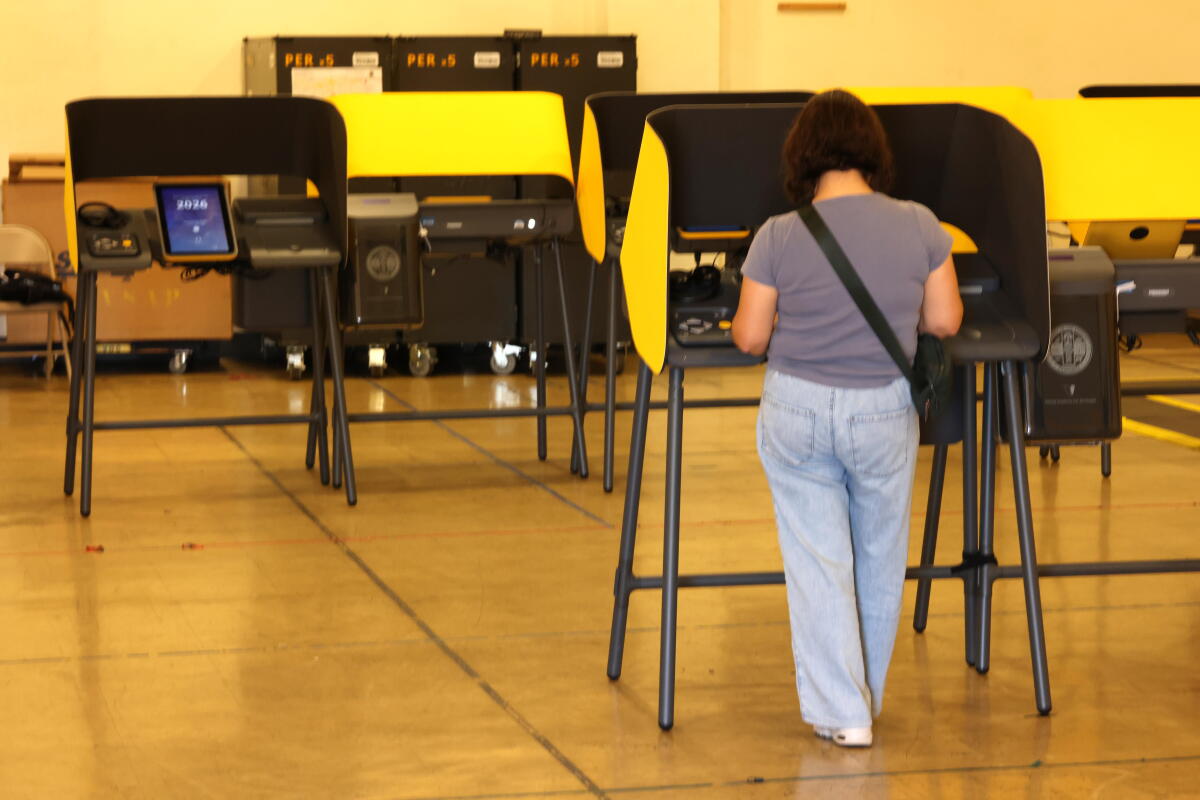
Photo: Genaro Molina / Los Angeles Times
By Dakota Jones | October 26, 2026
Desk: Political & Government, Campaigns & Elections.
Intro
Nine days before California’s November 3 midterm election, the Justice Department asked a federal appeals court to make the state stop counting mail ballots tied to 20,000 voters flagged by federal officials. The case reached the Ninth Circuit on Sunday. Because apparently ordinary court calendars were not dramatic enough.
A crucial distinction: the government has not physically seized these ballots. It wants a court order requiring election officials to set them aside and stop counting them until the voters prove they are U.S. citizens. The court has not granted that request.
The case, USA v. State of California, No. 26-7070, puts election administration, the limits of federal power and the reliability of voter data in direct collision. Right before voters head to the polls.
What Happened
The Justice Department sued California, Secretary of State Shirley Weber and Los Angeles County Registrar-Recorder/County Clerk Dean Logan on October 15. That came two days after Acting Deputy Attorney General Trent McCotter gave state officials 48 hours to set aside ballots linked to the flagged voters.
Then, on Friday, October 24, DOJ sent letters to county elections offices statewide. The demand: segregate the flagged ballots within 48 hours. The warning: possible criminal punishment for officials who refused.
On Sunday, the dispute landed before a three-judge Ninth Circuit panel: Mark J. Bennett and Patrick J. Bumatay, both appointed by President Trump, and Gabriel P. Sanchez, appointed by President Biden.
Bennett pressed DOJ lawyer Matthew Donnelly on the Constitution’s Elections Clause, which gives states authority to administer elections, subject to Congress’s oversight. California’s position is that the executive branch cannot simply override state election rules.
“It seems to me that you want us to issue an injunction that is entirely inconsistent with the law the California Legislature has adopted pursuant to the Elections Clause,” Bennett said. “How can we do that?”
That is not exactly a judge handing counsel a victory lap.
Bennett also questioned whether the appeals court had jurisdiction to act before the district court had ruled. Sanchez focused on another basic problem: where did the list come from? He asked which third parties supplied the data. Donnelly could not answer. Sanchez said that raised questions about the list’s reliability.
The Justice Department says it has “overwhelming evidence.” State officials say the administration has not provided proof supporting its claims. Los Angeles County’s preliminary review of a subset of the flagged voters found many were born in the United States, were not registered to vote and had never voted.
California argues that the demand is both unlawful and practically impossible to carry out before November 3. Once mail ballots are removed from their envelopes, the state says, officials cannot re-segregate them by voter. It also challenges the federal immigration and third-party data used to flag people.
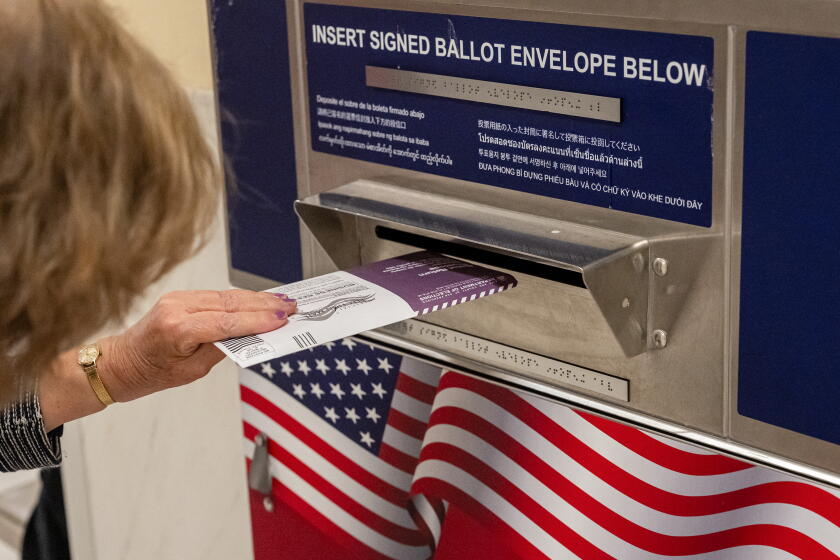
Photo: David Paul Morris / Bloomberg via Getty Images
The California Secretary of State’s October 20 press release says the administration acted “without a shred of concrete evidence.” It quotes the state’s filing: “At best, this litigation is a reckless political stunt. At worst, it threatens to disenfranchise thousands of Californians this election.”
The panel did not rule Sunday. A decision is expected soon. UCLA election law professor Rick Hasen wrote that the court seemed “very likely to reject” the appeal.
Why It Matters to You
This is not just a fight about one disputed list. It is a test of who gets to set the rules for running elections, and whether an emergency federal demand can upend local election procedures days before ballots are counted.
More than 3 million Californians have already voted, including more than 500,000 in Los Angeles County alone. If officials are ordered to interrupt the count, the immediate consequences would land on election administrators and voters whose ballots are caught in the dispute. The state says many flagged people may be eligible voters mistakenly swept into a questionable data match. DOJ says officials should verify citizenship before counting their ballots. The list and the claim remain disputed; no court has yet resolved them.
The timing is also notable. Independent election experts say DOJ broke with its longstanding policy of avoiding election disputes within 90 days of an election. That policy is intended to reduce the risk of disrupting voting or disenfranchising eligible voters close to Election Day.
And California is not the only front. The same Justice Department has sued Alaska to preemptively block certification of a Democratic Senate win. Federal prosecutors have also charged 28 legal permanent residents in California with election-related crimes. Those cases are separate; they do not, by themselves, establish that the 20,000 voters in this case cast illegal ballots.
For you as a voter, the practical advice is straightforward: check official election information, track your ballot through your county or state, and do not treat an allegation as a finding. For reliable coverage, that distinction matters. LD3’s news page reflects our focus on accessible, trust-first reporting.
Photo: Gary Coronado / For the Los Angeles Times
FAQ
Have the 20,000 ballots been seized or removed from the count?
No. DOJ is asking the court to order officials to set them aside and stop counting them. The panel has not ruled.
Has a court found that these voters are noncitizens?
No. The claims are disputed, and the Ninth Circuit has not issued a decision in this appeal.
Verdict
The most striking questions on Sunday came from the judges themselves, including the two Trump-appointed judges on the panel. Bennett asked how the court could issue an order that conflicts with California’s election law. He also questioned whether the appeals court could act before the lower court ruled. Sanchez pressed DOJ on the source of its voter list and got no answer.
When judges ask, “How can we do that?” the argument has a problem. That does not settle the case. But it makes clear that the government’s request faces serious questions about authority, procedure and evidence.
The larger concern is the precedent. Election administration is being litigated in real time, nine days before Election Day. Whatever the Ninth Circuit decides will matter beyond Los Angeles County and California. The court’s ruling could help define how far the federal executive branch can go when it challenges a state’s election procedures.
The next step is to watch for the court’s decision, and keep the distinction clear: a demand to stop counting ballots is not proof those ballots are unlawful.
Sources
- Los Angeles Times, “9th Circuit panel questions basis for feds’ request to block 20,000 California ballots”: October 25, 2026.
- Bloomberg Law, “Appeals Court Skeptical of DOJ Lawsuit Over California Ballots”: October 25, 2026.
- Primary source: California Secretary of State, Press Release PR26-132: “Office of the California Secretary of State Provides Update on U.S. DOJ Actions”. October 20, 2026.