The Justice Department Just Sued to Stop an Election From Being Certified. Read That Again.

By Dakota Jones
Desk: Campaigns & Elections (Political & Government)
ANCHOR OPEN
Here’s the sentence to sit with: The U.S. Department of Justice has sued Alaska, seeking to block certification of its U.S. Senate election results if incumbent Republican Sen. Dan Sullivan loses.
Read that again. Slowly, if needed.
The lawsuit was filed on October 22, 2026. President Donald Trump confirmed he personally directed the filing. The department says a second candidate named Daniel J. Sullivan on the ballot could confuse voters and threaten election integrity.
That is the government’s argument. It is not a court finding. And the request is narrower than “stop the election”: the DOJ seeks to block certification in a specific outcome scenario. That distinction matters. So does the fact that the federal government is asking a court to intervene in a state-run election.
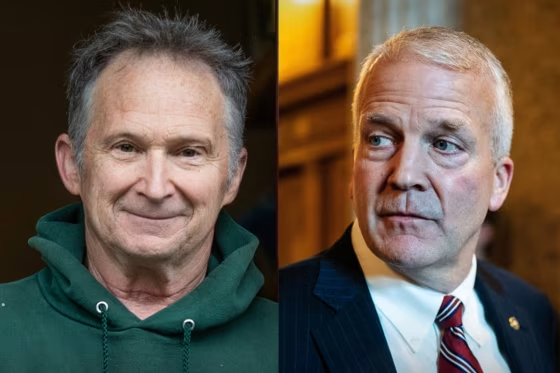
Two candidates with similar names are at the center of the DOJ’s ballot-confusion argument. Image via NBC News.
What the DOJ Is Asking For
What you’ll learn here: what the lawsuit seeks, why Alaska’s ranked-choice system is part of the dispute, and why the question of federal authority is now front and center.
The race is between Sen. Dan Sullivan, a Republican, and Democrat Mary Peltola. Daniel J. Sullivan is also on the ballot. The DOJ argues that the similar names could lead some voters who intend to support the incumbent to mark a ballot for the other candidate instead.
The requested remedy is conditional. The DOJ seeks to prevent certification if Dan Sullivan loses and if votes cast for Daniel J. Sullivan, treated instead as votes for the senator, would have changed the outcome under Alaska’s ranked-choice process.
That is not a request to cancel the election before votes are cast. It is a request that could affect certification after the election, if the conditions in the case are met.
A compact version for the control room:
Graphic: The lawsuit’s proposed certification test
- Sen. Dan Sullivan loses.
- The outcome would change if votes for Daniel J. Sullivan were counted for the senator, with ranked-choice tabulation applied.
- The DOJ wants certification blocked in that scenario.
That hypothetical raises an obvious practical question: how would anyone establish what a voter intended when a ballot is secret? The suit argues that the similar names create a risk. Whether the law permits the requested remedy, and how that risk could be assessed, is for the court to address.
Why Ranked-Choice Voting Matters
Alaska uses ranked-choice voting in this Senate race. Voters rank candidates in order of preference. That means the question is not simply whether a voter selected one name or another. The order of preferences can also matter to how the final result is calculated.
The DOJ’s argument focuses on the possibility that a voter intending to support Sen. Sullivan might select Daniel J. Sullivan by mistake. The department says that could affect the final result. But that claim is an allegation in a lawsuit, not proof that confusion occurred or changed the outcome.
There is a difference between identifying a possible source of voter confusion and establishing that it altered a result. There is also a difference between raising that concern and showing that federal law authorizes the remedy being sought. In a closely watched election, those distinctions are not fine print. They are the story.

Coverage of the Alaska Senate lawsuit. Image via CNBC.
The Bigger Question: Who Runs the Election?
What you’ll learn here: why the lawsuit has prompted a dispute beyond the names on a ballot.
States administer elections and certify results. The DOJ says it is acting to protect election integrity. Democratic groups and voting-rights organizations are seeking to intervene, arguing that the department lacks authority to interfere in a state-run election in this way.
That is the central legal contest. The court will have to consider the DOJ’s argument and the challengers’ response. As of this article’s publication, the lawsuit is an unresolved legal dispute, not a ruling that the DOJ can stop certification, and not a ruling that it cannot.
Trump’s role makes the case still more consequential. He confirmed that he personally directed the filing. That makes this more than a technical disagreement about ballot design. It puts the president’s direct involvement, federal power, and a state’s certification process in the same frame.
And the timing matters. When a federal agency asks a court to condition certification on a post-election review, voters deserve clear explanations of the rules, the evidence and the limits of the requested action. “Trust the process” is not a substitute for explaining what the process is.
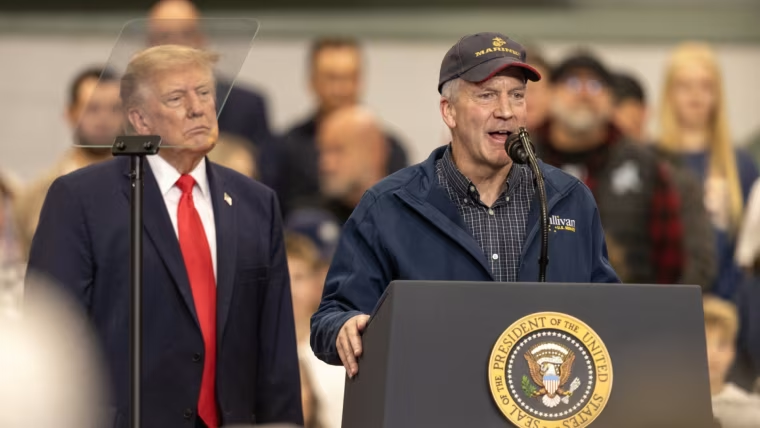
An NBC News explainer on the developing legal fight. Image via NBC News.
What Voters Should Watch Next
For voters in Alaska, and anyone following election administration elsewhere, the immediate task is to separate what has happened from what might happen.
Here is what is established:
- The DOJ filed its lawsuit on October 22, 2026.
- The suit seeks to block certification under a specific scenario involving the results of the Sullivan-Peltola race and the potential effect of votes for Daniel J. Sullivan.
- Trump said he personally directed the filing.
- Democratic groups and voting-rights organizations are seeking to intervene and dispute the DOJ’s authority.
Here is what is not established by the filing alone:
- That voters were actually confused.
- That any confusion changed the result.
- That the DOJ has the authority to obtain the remedy it seeks.
- That certification will be blocked.
Follow court developments and official election information from Alaska’s election authorities. If you are voting, check your ballot carefully and ask an election worker if you need help. A clear ballot and reliable instructions are useful. A federal lawsuit over certification is not a reason to assume your vote will not count.
For LD3 Productions’ broader approach to trust-first coverage and access across viewing platforms, see our news and updates and platforms.
FAQ
Did the DOJ try to stop Alaska’s election?
It sued to block certification of the Senate result under a particular scenario. The suit does not, by itself, stop the election or decide who wins.
Why does the lawsuit mention two Sullivans?
The DOJ argues that the similar names could confuse some voters and affect the result. That remains an allegation, not a court-established fact.
Did President Trump direct the lawsuit?
Yes. Trump publicly confirmed that he personally directed the filing.
Are Democratic groups and voting-rights organizations challenging the suit?
They are seeking to intervene and argue that the DOJ lacks authority to interfere in a state-run election in this way.
Has a court ruled on the DOJ’s request?
The lawsuit is pending. The filing is not itself a ruling, and the requested outcome is not automatic.
Final Thoughts
A government agency has asked a court to restrict certification of a U.S. Senate election based on a possible name-confusion scenario. That is the verified headline. The legal authority, the evidence of actual confusion and the practical path to determining voter intent are the unanswered questions.
The responsible response is neither panic nor a shrug. Read the filing, follow the court proceedings, and keep the distinction between an allegation and a ruling clear. In Alaska, as everywhere, public confidence depends on transparent rules and results that are certified through lawful processes, not on asking voters to take anyone’s word for it.
This article describes a pending legal dispute. Allegations in the lawsuit are not judicial findings. It is not legal advice.